
SHOOTBOLT
A uPVC shootbolt is a high-security locking mechanism used in uPVC windows and doors, primarily for casement and sometimes sliding/French door systems. It’s a key component of a multi-point locking system.
uPVC Shootbolt Works:
Unlike standard espagnolette locks that use cams or mushrooms along the side, shootbolts extend solid metal bolts (or “shooters”) vertically into the top and bottom frames (or the floor/head of the opening).
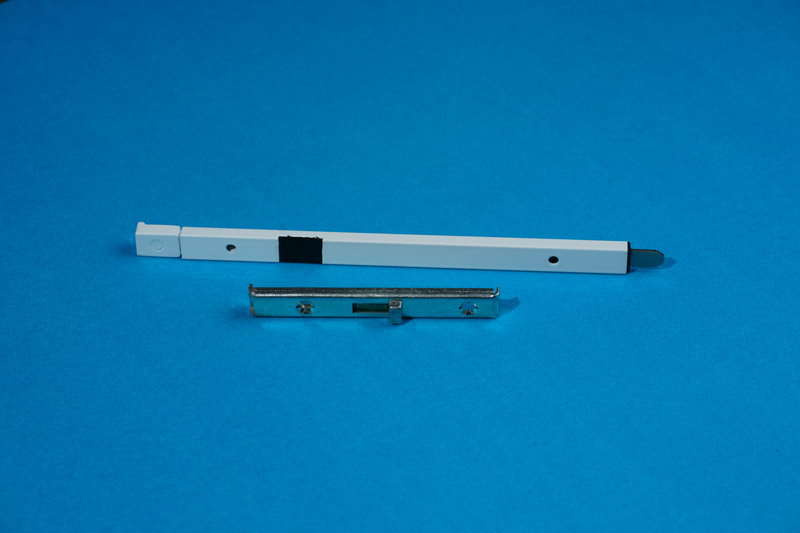
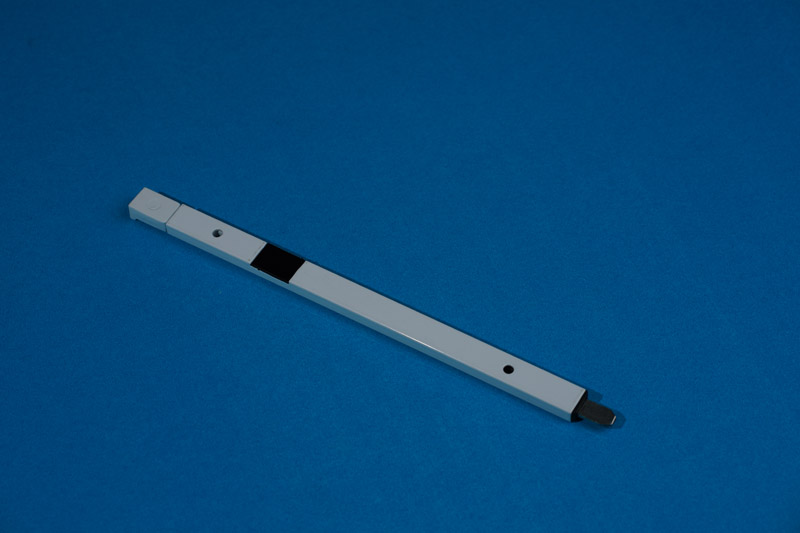
Here’s how it generally functions:
Operation: When you turn the window or door handle (which is connected to a central “gearbox” or “mechanism”), it activates the shootbolt mechanism.
Extension: This causes metal rods or bolts to “shoot” out from the top and bottom edges of the sash (the movable part of the window/door).
Engagement: These bolts then securely engage into corresponding “keeps” (receivers) installed in the fixed uPVC frame, or sometimes directly into the floor or the head of the door opening.
Multi-Point Security: This provides additional locking points at the very top and bottom of the sash, making it extremely difficult to pry open the window or door.
Key Characteristics and Importance:
High Security: Shootbolts offer superior security compared to cam-only espags, as they provide strong, direct locking into the frame at the furthest points. This is particularly important for taller windows and all uPVC doors.
Weather Sealing: By pulling the sash tightly into the frame at multiple points (often in conjunction with cams from the main espag), shootbolts contribute significantly to the window/door’s weather performance, preventing drafts and water ingress.
Durability: Made from robust materials, typically steel (often zinc-plated for corrosion resistance), to withstand significant force.
Types:
Integrated with Espag: Often, shootbolts are integrated as extensions of a central espagnolette lock. The espag handles the side locking points (cams/mushrooms), and the shootbolts extend from the espag’s top and bottom.
Stand-alone (less common for primary lock): In some older systems or for slave doors in French door setups, you might find finger-operated shootbolts that are separate from the main espag.
Croppable/Extendable: Many modern shootbolts are designed to be cut to size (“croppable”) or have telescopic extensions (“extendable”) to fit a wide range of window/door heights.
When are uPVC Shootbolts used?
Casement Windows: Particularly on taller casement windows where extra security is desired at the top and bottom.
French Doors (Double Doors): Essential for the “slave” door (the door that usually doesn’t have the main handle/key lock). Shootbolts are typically manually operated (often with small levers) to secure the slave door into the top and bottom of the frame, allowing the “master” door to lock securely against it.
General High-Security Applications: Any uPVC opening where maximum security is a priority.
Troubleshooting a Shootbolt:
If a window or door with a shootbolt isn’t locking or opening properly, it could be due to:
A jammed or corroded shootbolt rod.
Damage to the central gearbox that operates the shootbolts.
Misalignment of the shootbolt keeps in the frame.

Vasista Hardware is a top supplier of uPVC hardware in Hyderabad, India, providing a wide variety of uPVC hardware for windows and doors.
HYDERABAD OFFICE
- 8499022228 / 9010422239 / 9134555999
- sales.svhupvc@gmail.com
- SY NOS 53&54, PLOT NO.132, D.NO 5-67/10, Bahadurpally, Hyderabad, Telangana 500043
VIJAYAWADA OFFICE
- 8096922116 / 9849797717
- vasista.vijayawada@gmail.com
- 15-65,Prabhu Nagar,Poranki,Penamaluru, Vijayawada, Andhra Pradesh 521137