
DRILLING (REINFORCEMENT) SCREWS
What are uPVC Drilling (Reinforcement) Screws?
uPVC profiles (the actual plastic frames and sashes) are multi-chambered and, by themselves, are not strong enough to handle the stresses of large windows, heavy glass, or the forces exerted on doors. To provide the necessary rigidity, stability, and screw retention, steel reinforcements (typically galvanized mild steel sections like C-channels, U-channels, or square tubes) are inserted into the main chambers of the uPVC profiles.
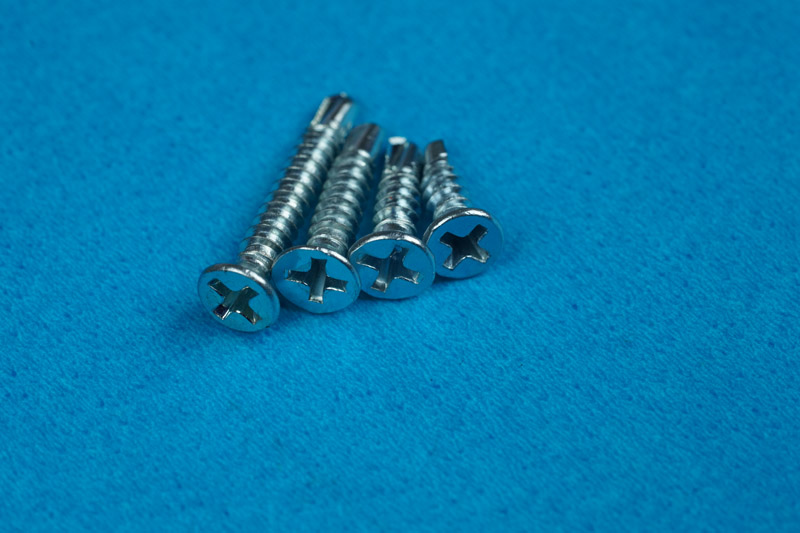
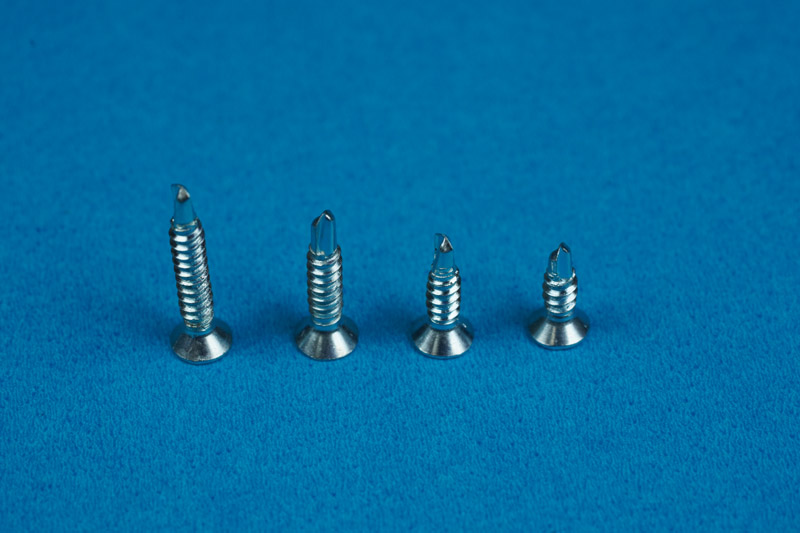
uPVC drilling (reinforcement) screws are then used to:
Fix the Steel Reinforcement: They penetrate the uPVC wall and secure themselves into the internal steel reinforcement. This anchors the steel within the uPVC profile, preventing it from shifting.
Mount Hardware: Crucially, when hardware like hinges, multi-point locks, and keeps are attached to the uPVC profile, the screws used for this hardware must pass through the uPVC and securely bite into this internal steel reinforcement. This provides a strong, durable, and secure fixing point, ensuring the hardware doesn’t pull out of the uPVC over time, especially under stress from opening/closing or attempted forced entry.
Key Characteristics of uPVC Drilling (Reinforcement) Screws:
Self-Drilling & Self-Tapping: This is their defining feature. They have a sharp, drill-like tip that allows them to pierce through the uPVC and then drill into the steel reinforcement in a single action, without needing a pilot hole in the steel. The threads then tap into the created hole. This significantly speeds up the fabrication process.
Pan Head or Countersunk Head:
Pan Head: Common for securing the steel reinforcement within the profile where the screw head doesn’t need to be flush.
Countersunk Head: Used when fixing external hardware where a flush finish is desired (e.g., for certain hinge types or lock cases).
Material and Coating:
Hardened Carbon Steel: Often used due to its strength, typically with a high-quality zinc plating (e.g., yellow passivation, bright zinc plated) or other advanced corrosion-resistant coatings (e.g., zinc-nickel, ceramic coatings like “Atlantis” or “HCR-X™”). Corrosion resistance is vital as these screws are embedded within the uPVC, where moisture can accumulate.
Stainless Steel: Less common for the internal reinforcement screws due to cost, but sometimes used in highly corrosive environments.
Fine, Aggressive Thread: Designed to provide maximum grip in both the uPVC and the steel.
Specific Lengths and Diameters: Common diameters include 3.9mm, 4.2mm, and 4.8mm. Lengths vary greatly depending on the thickness of the uPVC profile and the depth of the steel reinforcement, but common lengths might be from 13mm up to 40-50mm.
Why are they crucial?
Without these specific screws, or if incorrect screws are used:
The steel reinforcement might not be properly secured, leading to profile distortion.
Hardware (hinges, locks) will only be screwed into the uPVC, which is not strong enough for long-term secure fixing. This will lead to hardware coming loose, doors/windows sagging, and compromised security.

Vasista Hardware is a top supplier of uPVC hardware in Hyderabad, India, providing a wide variety of uPVC hardware for windows and doors.
HYDERABAD OFFICE
- 8499022228 / 9010422239 / 9134555999
- sales.svhupvc@gmail.com
- SY NOS 53&54, PLOT NO.132, D.NO 5-67/10, Bahadurpally, Hyderabad, Telangana 500043
VIJAYAWADA OFFICE
- 8096922116 / 9849797717
- vasista.vijayawada@gmail.com
- 15-65,Prabhu Nagar,Poranki,Penamaluru, Vijayawada, Andhra Pradesh 521137