
Flat Hinge (2D Hinge)
A “uPVC 2D – Flap Hinge” refers to a specific type of hinge used on uPVC doors, and sometimes windows, that offers adjustability in two dimensions. The term “flap hinge” is often used interchangeably with “flag hinge” due to its visual appearance and how it pivots.
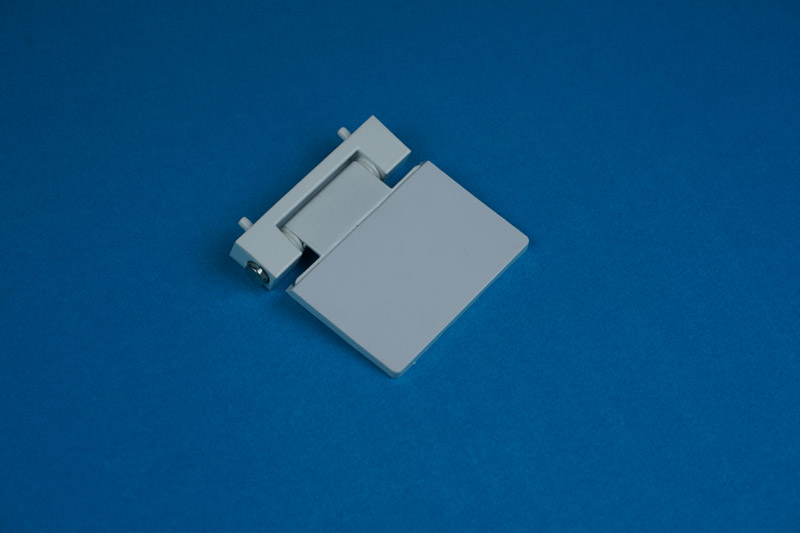
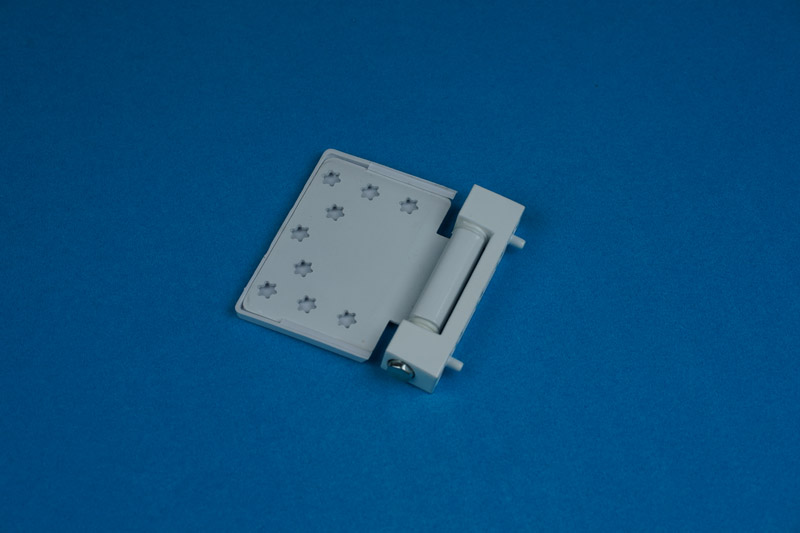
1. “2D” (Two-Dimensional Adjustment): This means the hinge typically allows for adjustment in:
Horizontal (side-to-side) adjustment: Moving the door/window sash left or right within the frame. This is crucial for achieving an even gap around the sash and ensuring it doesn’t rub against the frame.
Vertical (up-and-down) adjustment: Moving the door/window sash up or down to align it perfectly with the frame or to compensate for slight settling over time.
Important Note: There are also “3D” hinges that offer an additional “in-and-out” or compression adjustment, which further fine-tunes the seal against the frame. However, 2D hinges are common and provide sufficient adjustment for many applications.
2. “Flap Hinge” (or Flag Hinge): This refers to the design of the hinge.
It typically has a central “knuckle” or pin around which the door pivots.
One part of the hinge (the “flag” or “flap”) extends outwards, often with a cover, and sits on the face of the uPVC profile.
They are often visually prominent on the door or window frame when the sash is closed.
Unlike “butt hinges” (which are recessed into the profile) or “rebate hinges” (which wrap around a rebate), flap/flag hinges are designed to be surface-mounted or to sit prominently on the edge of the profile.
Key Characteristics and Benefits of uPVC 2D Flap Hinges:
Adjustability: The primary advantage is the ability to easily adjust the door/window’s alignment after installation or over time, without having to remove the sash. This is done via grub screws, often hidden under a cover cap.
Load Bearing: They are designed to bear the significant weight of uPVC door and window sashes, which can be heavy due to the multi-chambered profiles and often double-glazed units.
Durability: Made from robust materials, often a combination of steel, zinc alloy, and uPVC covers, to withstand frequent use and various weather conditions.
Security: While hinges are not the primary locking mechanism, a well-adjusted and secure hinge contributes to the overall security of the door by ensuring a tight fit and preventing the sash from being easily dislodged.
Aesthetics: They often come with covers to conceal the fixings and adjustment screws, providing a clean and neat finish.
Common Applications:
uPVC Casement Doors: Very common for residential and commercial uPVC casement doors.
uPVC Casement Windows: Also used on side-hung uPVC casement windows.
Identifying a uPVC 2D Flap Hinge:
Visual Appearance: Look for hinges that sit on the face of the uPVC profile rather than being fully recessed. They will have a distinctive “flag” or “flap” shape.
Visible Adjustment Screws: Carefully inspect the hinge (especially with the door/window open). You might see small grub screws (often Allen key operated) on the side or top/bottom of the hinge barrel, which indicate adjustability.
Manufacturer Markings: Look for brand names (like SFS, Pego, Accufit, McCoy, Roto, etc.) or part numbers on the hinge body, especially under any cover caps. This is the best way to ensure an exact replacement.
Measure: Measure the height of the visible part of the hinge, the distance between screw holes, and the width of the hinge flap.

Vasista Hardware is a top supplier of uPVC hardware in Hyderabad, India, providing a wide variety of uPVC hardware for windows and doors.
HYDERABAD OFFICE
- 8499022228 / 9010422239 / 9134555999
- sales.svhupvc@gmail.com
- SY NOS 53&54, PLOT NO.132, D.NO 5-67/10, Bahadurpally, Hyderabad, Telangana 500043
VIJAYAWADA OFFICE
- 8096922116 / 9849797717
- vasista.vijayawada@gmail.com
- 15-65,Prabhu Nagar,Poranki,Penamaluru, Vijayawada, Andhra Pradesh 521137